
Acoustic Camera Systems and Methods
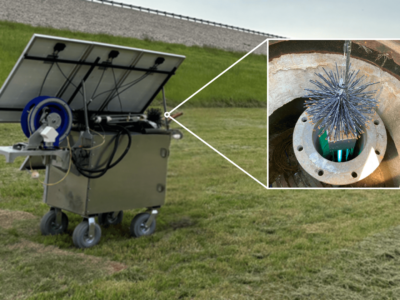
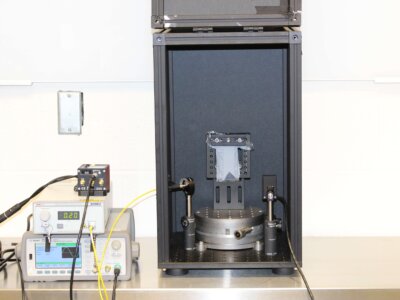
• Captures 2D velocity maps across large areas
• Uses compact, simpler equipment for easy field use
• Supports comprehensive flow analysis in rivers, coastal areas, and industrial water systems


• Captures 2D velocity maps across large areas
• Uses compact, simpler equipment for easy field use
• Supports comprehensive flow analysis in rivers, coastal areas, and industrial water systems

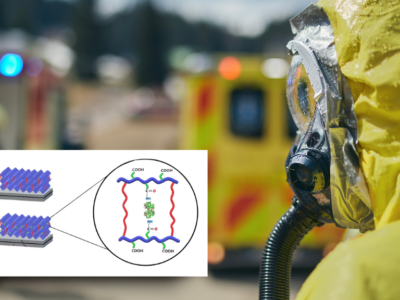
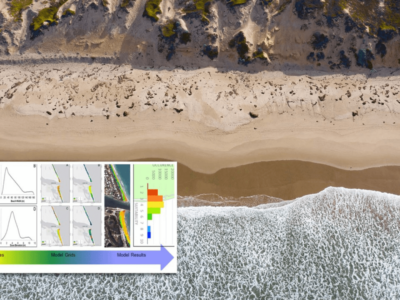
• Provides simple tools for conducting cost-effective computational testing of a range of chemicals and materials, avoiding unnecessary lab-based testing
• Normalizes emission concentration values, enabling appropriate comparisons
• Includes a cumulative repository of scientific data, making automatic real-time adjustments to impact models as the database is updated

• Ensures access across lighter convey waves, bridging systems, and austere sites
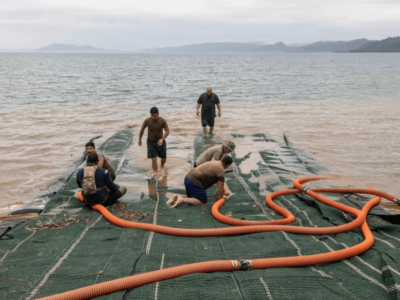
• Achieves full-scale trafficability testing, rapid prototyping, and performance objectives
• Provides an affordable option for rapid deployment of a trafficable roadway by a small crew in austere coastal environments

• Is inserted into a sand boil to relieve underground hydrostatic pressure and inhibit subterranean erosion that can cause levee failure
• Can be installed by one worker in 15 minutes, making it 47% faster than installing sandbags, significantly cheaper, and less labor-intensive
• Reduces the time workers and people downstream are exposed to a potential levee failure as well as speed up the pressure reduction in the levee

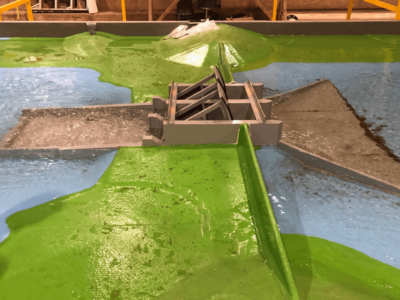
• Distinct CNC programming digitally creates expanded polystyrene foam (EPS) blocks that can be easily employed to create more detailed and accurate bathymetric models than traditional concrete
• EPS foam blocks can be easily and rapidly placed and removed in situ, allowing prototype refinement, use in limited space areas, and storage
• Using EPS reduces construction costs by 30-60% and allows up to 60% faster construction time compared with concrete modeling

• External maintenance via human intervention not required
• Shorter downtime leads to an estimated 10x decrease in operational costs
• Offers scalability via a compact footprint for continuous water treatment and higher daily flow-through volumes

• Low-cost, low-power, and low-maintenance
• Bypasses need for expensive infrastructure and offers extended range between nodes
• Supports emergency navigations

• Potential to significantly reduce operational costs
• Eliminates the need for inorganic coagulants
• Scalable
• Economical
• Advantageous use of B. subtilis

• Over-bridge free spans (e.g. damaged piers or bridges)
• Side-load or end-load railcars anywhere along the line
• Deploy on uneven surfaces and compromised preexisting structures
• Assembles quickly without the need for power tools or heavy machinery
• Recoverable and reconfigure

• Stops large vehicles upon contact
• Place or recover in less than 30 minutes
• Integrates into QuadCon for easy storage, transport and deployment
• No specialized equipment or tools required
• Blocks areas of any size with incrementally linkable 8'-width units

• Gathers data remotely, without entering blast radius
• Simple wireless configuration
• High-speed data acquisition (DAQ) solution

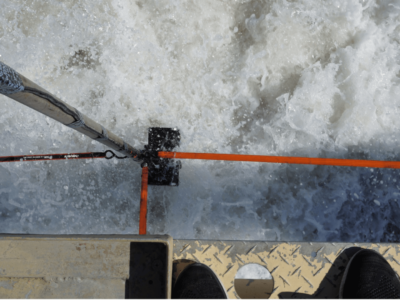
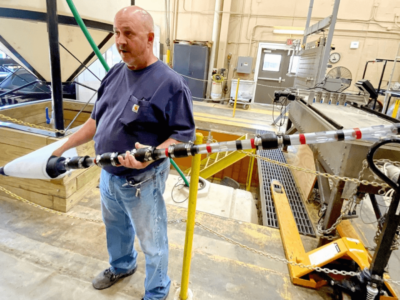
• Quick, real-time measurement of bedload flow rates
• Precise transport rate of bedload using quantitative data
• Less intrusive and potentially damaging than samplers
• Prevents costly navigation delays